When Your Body Doesn’t Feel Like Home
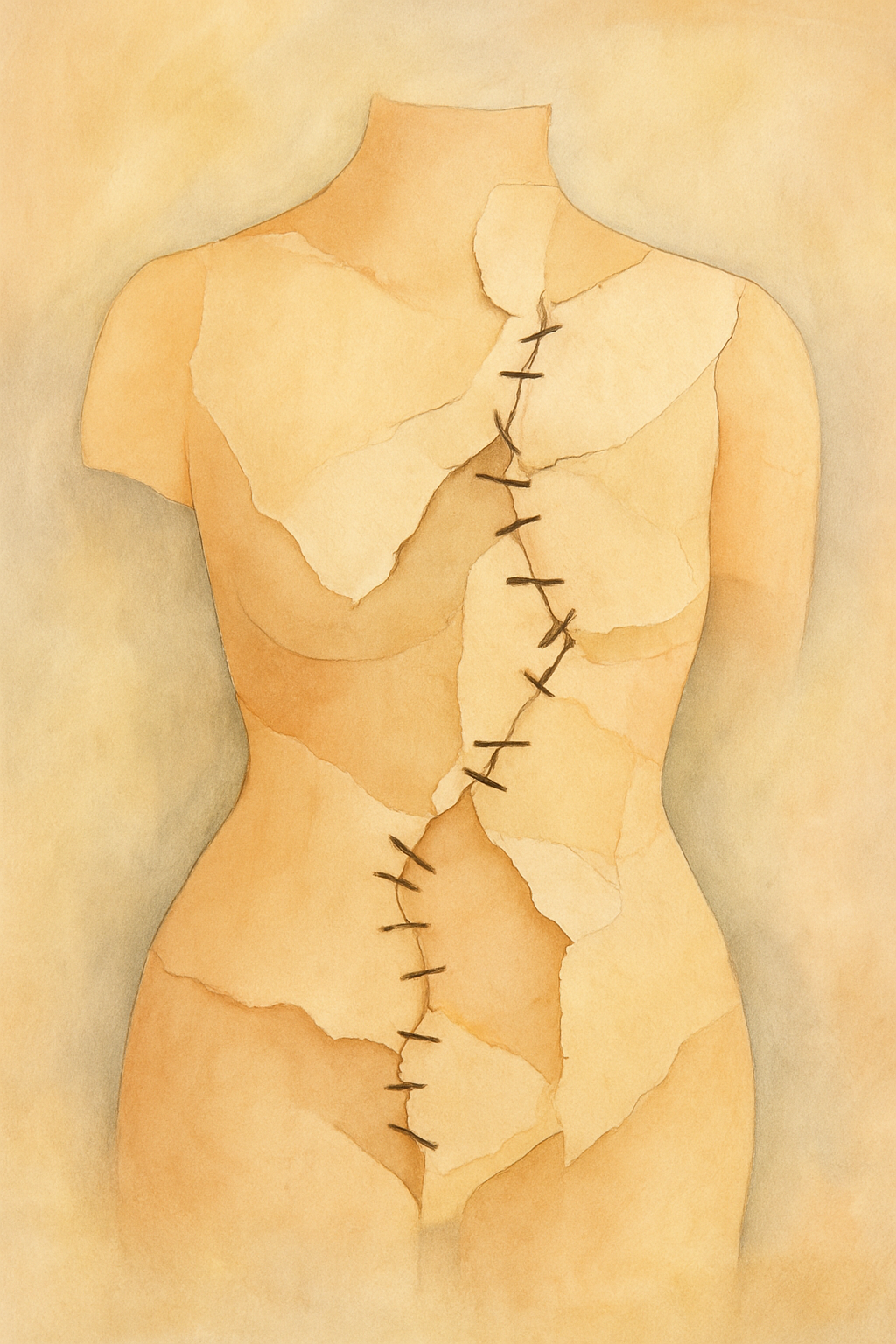
I’ve never felt fully safe in my skin. Not really. Not as a kid, not as a teenager, not even now.
I grew up believing my body was a problem that needed fixing. That it wasn’t mine to embrace—but mine to manage, criticize, and shrink. It felt more like a punishment than a home.
Part of it was the times. The early 2000s were brutal. Low-rise jeans, Paris Hilton thinspiration, tabloid headlines zoomed in on women’s “problem areas” with red circles. “Too much,” “Too soft,” “Too big.” And then there was me—an Asian girl who didn’t fit the delicate, petite stereotype that people expected. I was Bigger. And in my family, that was unacceptable.
I still remember coming home from kindergarten and the first thing my mom asked was, “How many kids are fatter than you?” Not Did you have fun? Not What did you learn? Just: How do you rank?
Comparison wasn’t just a game—it was a survival tactic. The only way to feel okay was to be smaller than someone else. But I never was. So I learned to feel wrong in my body. Always too much. Never enough.
By the time I was a teenager, I had memorized the math of guilt. How many calories. How many hours of exercise. How many pounds I still needed to lose to be lovable.
Detoxing meant not eating for days. Control meant skipping dinner and calling it “discipline. And when I overate, I purged—but not always, so I convinced myself: “It’s not a real eating disorder. Just sometimes.” As if the frequency made it any less painful.
And even now, as an adult who knows better— I still have moments where I look in the mirror and negotiate with myself. If I just lose five pounds. If I skip this meal. If I punish myself a little more—then maybe…
Maybe what? Maybe I’ll finally feel safe?
The truth is: I’ve been trying to earn safety in my own body since I was five years old.
It’s taken years—and it’s still taking time—to unlearn all the ways I’ve disassociated from the skin I live in. To understand that how I feel matters more than how I look. But that message doesn’t always win. Not in this world. Not in this body.
Still, I’m learning. To listen to my body instead of criticizing it. To move because it feels good, not because I hate what I see. To nourish it without shame. To speak gently to it after decades of shouting.
Some days I succeed. Other days, I scroll through old photos and wonder how I let myself go. But then I remember: My body isn’t a trend. It’s a timeline. It carries every version of me—every survival, every hurt, every start-over. It deserves softness. Not scrutiny.
I’m not where I want to be yet. But for the first time, I’m trying to be on my own side. Not because I’m perfect. But because I’m finally realizing—I don’t have to be.