The Conversation We Never Had Again
In my house, you didn’t talk back.
Not to your parents. Not even when they were wrong.
Especially not when they were wrong.
To speak up was disrespectful. To disagree was betrayal.
I remember being a child, carefully bringing a bowl of soup to the table. My dad turned suddenly, and the bowl spilled—hot liquid soaking my clothes and skin. It wasn’t his fault, of course. It was mine. Everything always was.
My father never apologized. Neither did my mother. Growing up, our household had one rule: parents are always right. If they weren’t, you stayed quiet anyway. My father held grudges like sacred rituals. If you crossed a line—real or imagined—he’d throw you out of the house, literally.
One of my earliest memories is crying in a closet. I don’t remember why. Just that my father dragged me onto the porch and left me there in the dark. Later, my mother came out—not to comfort me, but to tell me I could come back inside once I had “Ninh”—a Vietnamese word for quiet obedience. Only when I had swallowed every emotion was I allowed to return.
That moment taught me something dangerous:
Feelings make you a problem. Silence makes you safe.
Distance Was Survival
After college, I left the state.
Some of it was ambition.
Some of it was survival.
I was tired of feeling like a burden. Tired of biting my tongue through every disagreement. Tired of performing gratitude for a life that never felt fully mine.
When I got married, my mother praised me—publicly. She told her friends how proud she was. How successful I’d become. She claimed credit for it, boasting about the daughter she raised. In her version of the story, I had always been on this perfect path. And she had been the reason.
I said nothing.
But what she never mentioned—what no one ever saw—was the stretch of years where I broke down and left the country. When I was so poor I was stealing toilet paper and skipping meals. When she called me—not to ask how I was—but to remind me I needed to grow up and get married. When I quit my first job out of college to join a consulting firm, she scolded me for being ungrateful. I was lucky to have a job, she said. I should be thankful they hired me at all.
No one saw the version of me curled up in a bed in a foreign country, empty, exhausted, invisible. No one but me. And now here she was—bragging about my life like it was her greatest accomplishment.
The Holidays and the Boiling Point
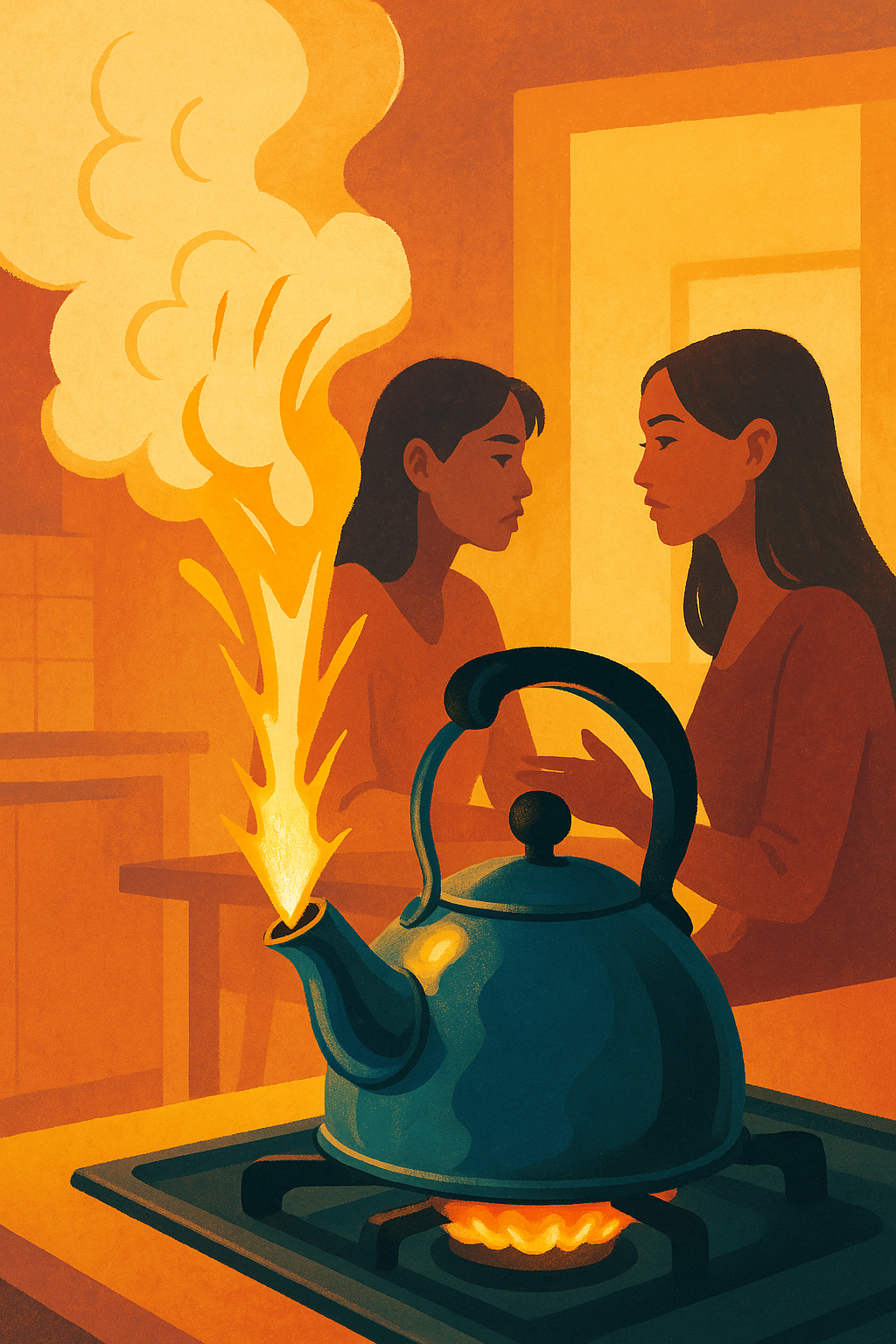
The holidays always get to me. All the emotions, all the pretending. One night, after a few drinks and long after everyone had gone to bed, I snapped.
I told her.
I told her I’m not successful because of her—I’m successful despite her. That she doesn’t get to cherry-pick my accomplishments and call it pride when she was never there for the pain. That her approval feels hollow when it only showed up after I fit into the mold she always wanted.
I didn’t scream. I didn’t cry. I just… said it.
For a moment, I thought I’d feel lighter. Like all those years of quiet would lift off my shoulders. Instead, she looked at me and said, “What do you want me to say? That I’m a terrible mother?”
And I didn’t want that.
I just wanted her to see the truth.
To hear it. To hold it with me.
I told her I knew she tried. That she did the best she could. But even with her best, I always felt like another burden she never asked for. Another struggle to carry.
Not a Movie Ending
I had always imagined a moment like this would end like the movies. A cathartic breakthrough. A long hug. A renewed relationship—closer, more honest, more whole.
But life isn’t a movie.
We went to bed.
And we never talked about it again.
The Unsaid Still Lingers
There was no closure. No tidy ending. Just two women sitting in the thick fog of decades-old silence, barely acknowledging what had just happened.
But I said it.
And maybe, for now, that’s enough.
Sometimes growth doesn’t come with a resolution. It comes with the discomfort of truth finally spoken. Even if no one says a word back.