Sometimes No One Wins, and that's okay
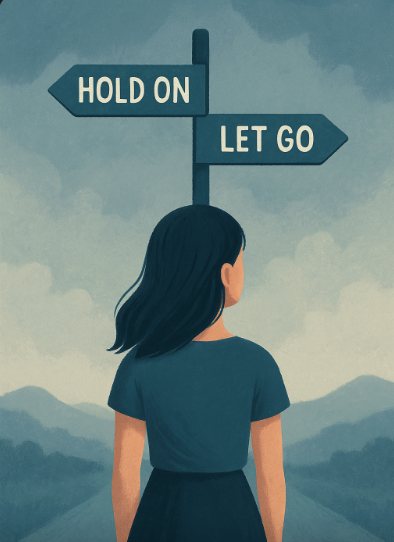
When I watched Ken Burns’ documentary on the Vietnam War, there was a line that lodged itself in my chest:
“In war, no one wins or loses. There is only destruction.”
The Vietnam War claimed millions of lives. It redrew borders, toppled governments, and left a legacy of displacement, grief, and mistrust that still echoes today. My family was part of that aftermath. If the war had gone differently—or never happened at all—my life’s trajectory would have been unrecognizable.
But the war didn’t end when the fighting stopped. Its aftershocks lingered—in refugee camps, in family stories told in whispers, and in the anxious way I sometimes carry myself through the world, as if danger is always just outside the door. That inherited tension lives in my bones.
When I heard that quote, I realized it wasn’t just about battlefields or nations. It was about the war I wage inside myself.
I’ve been at war with my own feelings for as long as I can remember—fighting between who I am and who I was told to be, between speaking the truth and keeping the peace. And in that war, just like in Vietnam, I’ve wondered:
What does it really mean to “win”? In conflict, in healing, in reconciliation—what is the finish line? And what happens when the closure we’re hoping for never comes?
The Myth of Closure
There have been times in my life where I thought confronting the pain head-on would bring peace.
I thought that if I finally opened up to my mom about my struggles, it would bring us closer. It would show her the real me, and not the curated me I’ve given her all those years. That by acknowledging I knew she did the best she could, she’d feel seen—and I would too.
For years, I’d rehearsed the conversation in my head. How I’d say it gently, with compassion. How she might pause, really hear me, maybe even share her own feelings in return. I pictured the air between us softening. I imagined a kind of mutual exhale.
But when I finally gave her a glimpse of my pain, it didn’t land the way I’d hoped. She didn’t feel closer to me. She just felt like a bad mother. Her face tightened, her tone shifted, and suddenly the focus wasn’t on what I’d lived through—it was on her guilt. And that’s when guilt hit me for mentioning it at all.
It’s a complicated thing, to share your truth with someone you love and watch it wound them. I wanted her to understand me, not hurt her. But in that moment, my words felt like a weapon I hadn’t meant to use. I could see her retreat into defensiveness, into the need to justify, into the walls she’s built over a lifetime.
I left the conversation carrying both the weight of my story and the added burden of her reaction. It made me wonder if some truths are too heavy to hand to the people who were part of them.
It turns out life doesn’t unfold like the movies. The ending scene where both people reach mutual understanding, where pain melts into apology, where healing is perfectly timed.
Just because I’ve started to heal doesn’t mean the other person has. Just because I’m ready to talk doesn’t mean they’re ready to listen—or even remember. Sometimes, the hardest truth to sit with is this:
Closure isn’t a conversation. It’s a decision.
The Illusion of Winning
We grow up with this idea that someone has to win. That healing means resolution. That forgiveness must be mutual. That apologies are owed and understanding is guaranteed.
But in most of my experiences, that’s not what happens.
In every difficult conversation I’ve had, no one came out feeling victorious. We were all walking around with our own version of the story, all carrying our own pain. Everyone sees themselves as the one who was hurt. Everyone has their reasons. Their context. Their defenses.
And sometimes, no one wins.
But maybe that’s the point.
Redefining Forgiveness
Forgiveness doesn’t mean forgetting. And it doesn’t mean being okay with what happened.
Forgiveness, I’m learning, is about letting go of the need for the other person to make it right. It’s releasing yourself from the burden of waiting—for the apology, for the recognition, for the perfect resolution that may never come. Because it will eat you alive.
Closure doesn’t come from someone else. It comes from within. It comes from accepting that sometimes, we won’t get the ending we hoped for—but we can still choose peace.
So no, maybe there’s no winner. No final scene with tears and reconciliation and the music swelling.
But there is something else: the choice to keep living, to keep growing, and to stop holding your healing hostage to someone else’s readiness.
And maybe that’s not a win.
Maybe that’s something better.