Sex Was the Elephant in the Room I Was Raised to Ignore
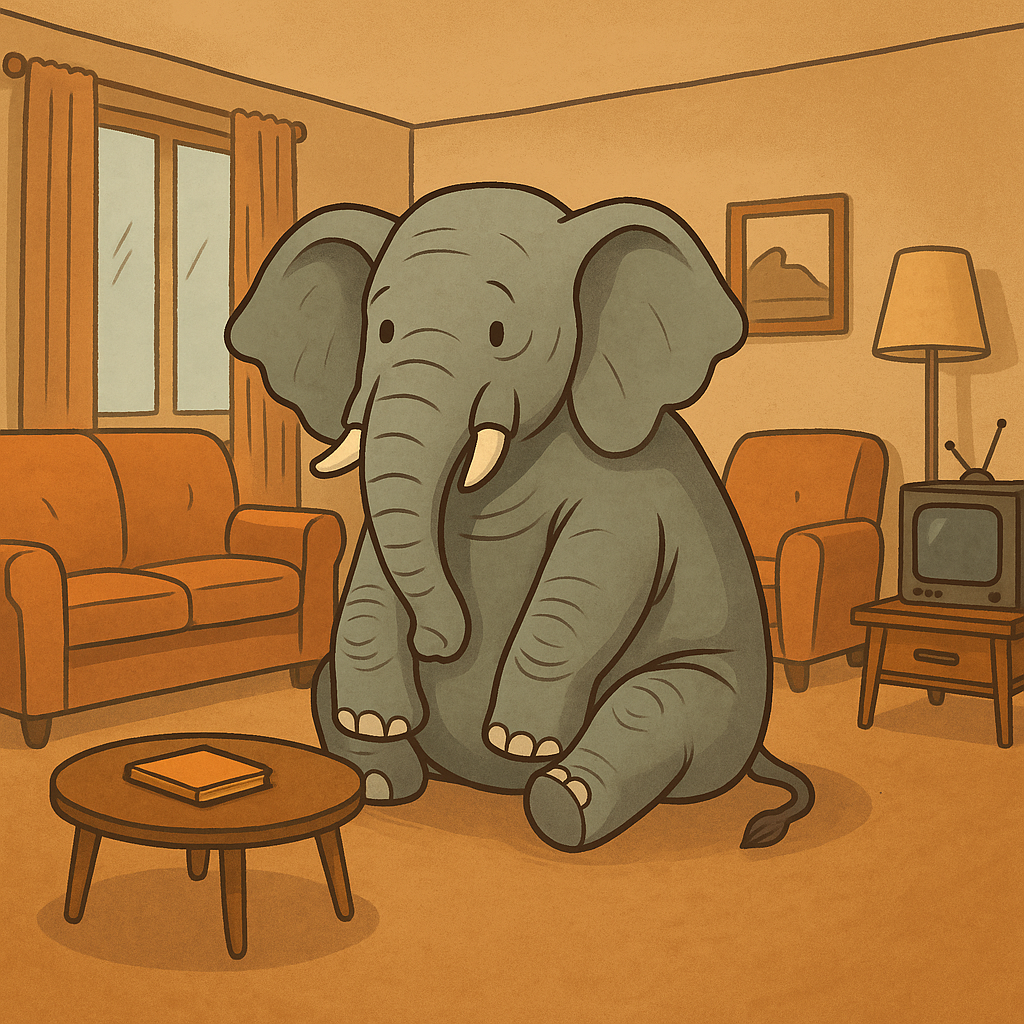
I never got the birds and bees talk.
I never got the tampon talk either.
Sex wasn’t something we discussed in my household—it was something we avoided. It lived in the background, unspoken but omnipresent. It was the silent reason I wasn’t allowed to go out, to stay after school, to play sports, or to have many friends. Whenever I questioned those rules, the answer was always the same: We just want to keep you safe.
But safe from what?
Looking back, it was always about sex. Or more accurately—about not having it. The worst thing a daughter could do was get pregnant before marriage. Not because of health. Not because of readiness. But because of shame.
In my family, a daughter’s pregnancy wasn’t just a personal matter—it was the public stain of failure. And because you can’t get pregnant without sex, the solution was simple: pretend sex didn’t exist.
Raised in Contradictions
I wasn’t raised to talk about sex. I was raised to be subservient, modest, marriageable. The expectation was clear: grow up, meet someone, get them to love you, have children, and then repeat the cycle. That was the script.
Any deviation from that script? Dangerous. Shameful. Not spoken about.
Sometimes now, as a joke, I’ll ask my mom what sex is. She just rolls her eyes and tells me to shut up. But the truth is—how could I be expected to avoid something I was never allowed to understand?
In our culture, men can disappear. A pregnancy can be hidden by a boy. But for girls, the consequences are visible. A girl doesn’t get to hide. She becomes the scandal. The “dirty laundry.” The one to be blamed.
Learning the Hard Way
I had to learn about sex from schoolmates. And even then, it wasn’t learning—it was surviving. Boys would say crude things to me in the hall. They’d hump my backpack. They’d mock me with accents I didn’t understand, telling me “Me love you long time.” I laughed along, not because it was funny, but because I didn’t know any better—and I didn’t want to be left out.
I had to forge my parents’ signature just to take the sex ed class at school. Not because I was curious, but because I didn’t want to be the only one standing outside the classroom like a loser. I didn’t even know what I didn’t know—only that I was supposed to stay silent about it.
In college, I finally learned the meaning of that mocking phrase when I saw Full Metal Jacket in a sociology class. I was horrified. Not just by the scene, but by the awareness of what people had been mocking me with it for years—and I had smiled through it.
Even worse, I once had a teacher tell me—casually, almost like a warning—that at some point in my life, I would be raped. It was never, “you are valuable, you are worthy of protection.” It was, “this will happen, and that’s just how it is.”
Still Not Fully Mine
Even now, as an adult with agency and awareness, it doesn’t always feel like my body is fully mine. In the eyes of Pro-Life legislation, it isn’t. If I were to become pregnant today, there are places in this country where I would have no legal choice. My body would belong to the state. To lawmakers. To ideology.
Meanwhile, the man involved—he can disappear. Just like that.
So what do you do when you’ve been raised in a home that punishes curiosity and a world that punishes freedom?
- You learn in whispers.
- You figure things out in fragments.
And eventually, if you’re lucky—you find the courage to reclaim what was always yours.
Where I Am Now
I’m still untangling it all.
I’m still learning what it means to be in control of my own body, my own desires, my own boundaries. I’m still discovering what love means when it’s not tied to shame. And I’m asking questions I was never allowed to before—questions about care, about healing, about what I want.
I don’t have all the answers. I’m not sure I ever will.
But I know this:
- We deserve better than silence.
- We deserve more than shame.
- We deserve full ownership of our bodies, our choices, and our stories.
And maybe it starts with saying the things we were never allowed to say.