Raised to Be Silent—But I Found My Voice Anyway
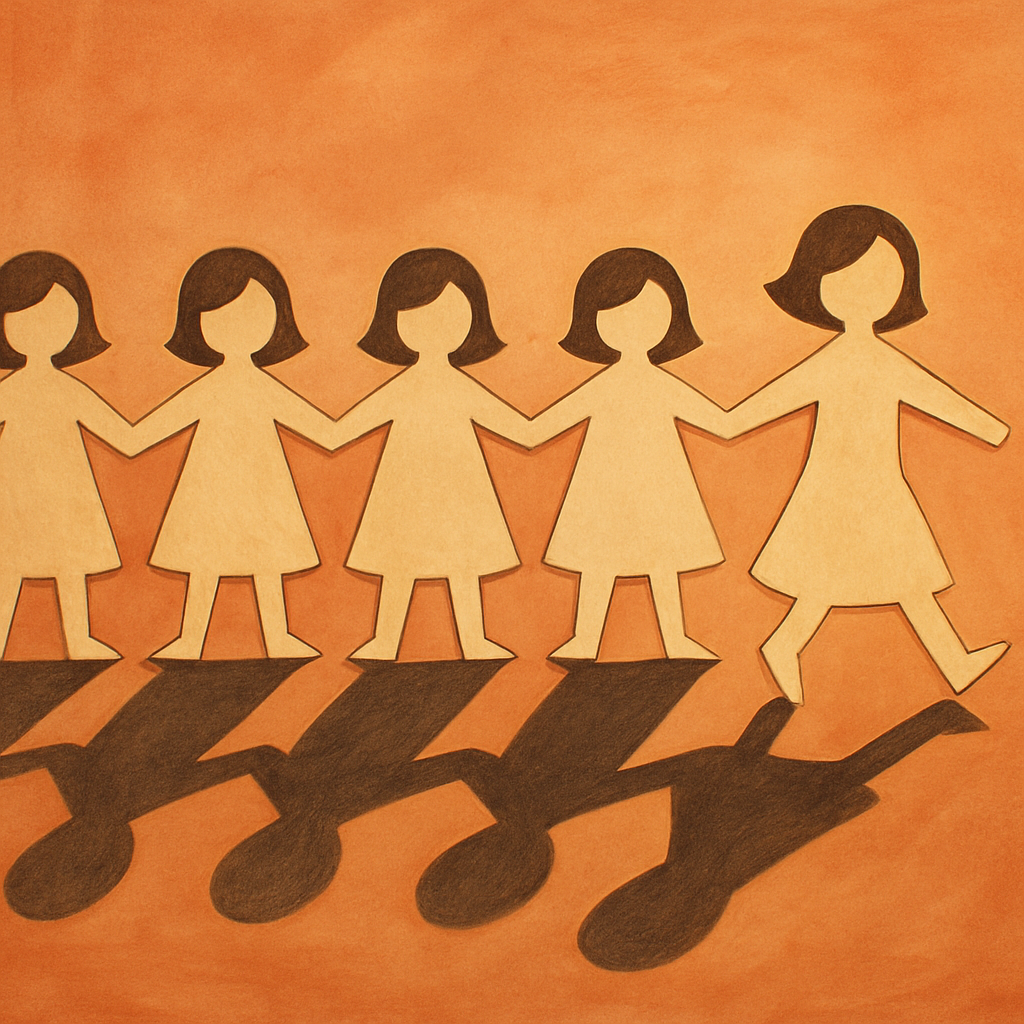
How I unlearned obedience, reclaimed my voice, and found freedom
"Be quiet." "Only speak when spoken to." "Don’t talk back to your elders."
These weren’t just rules in my house—they were gospel.
People used to praise my family for how “well-behaved” we were. Obedient. Disciplined. Silent. The girls stayed in the background, helping, cleaning, not asking for much. The boys were allowed to be loud, rowdy, funny—especially my brother. He was the life of the party.
That was our role. That was the script.
The only exception was my oldest sister—Chi Hai. She held the highest rank, not just she was the first-born. We followed her, no questions asked. Respect was non-negotiable, and hierarchy wasn’t just cultural—it was personal. As the youngest, my place was already assigned. Follow. Serve. Stay quiet.
I carried that conditioning everywhere. Even now, when I’m at someone else’s party, I instinctively start cleaning up in the kitchen. I don’t know how to sit still. I don’t know how to receive. I only know how to help. That’s how I was groomed—through silence and service. And that’s probably why toxic relationships felt so familiar. When all you know is obedience, control doesn’t always look like abuse—it looks like love.
I spent years mistaking compliance for connection. Mistaking being chosen for being cherished. Mistaking being needed for being wanted.
And because I had been silent for so long, I stayed that way. Quiet. Accommodating. Afraid to ask for more. Yes, that upbringing gave me grit. It gave me focus. A work ethic that could outlast anyone in the room. But it also nearly erased me.
It wasn’t until I left home—physically and emotionally—that I realized how small my world had been. After college, I took a job out of state. It was the first time I didn’t have to show up for weekly family obligations, the first time I had space to breathe.
And I’ll never forget the first time I went to Subway by myself. I stood there, overwhelmed by the menu, panicked that no one was speaking for me. For years, someone else had ordered for the whole family. I didn’t even know what I liked. I just knew how to follow.
But slowly, my world expanded. Independence was terrifying—but also liberating. For the first time, I could think freely. Live freely. Talk freely. And once I started talking, I couldn’t unsee the patterns.
I began noticing the imbalance—how the boys in my family were raised differently than the girls. How the things I accepted as “normal” were actually deeply unfair. And when I spoke up, I wasn’t met with reflection. I was labeled difficult. Disrespectful. A disappointment.
The more I found my voice, the more distant I became from my family. And that ache—the one of being too much and never enough at the same time—almost swallowed me whole.
I remember once, after yet another tense conversation, my mother told me to hurry up and get married. And I asked her: “Would you rather I be with someone who beats me… or be single?” She said, “I didn’t raise you to be with someone like that.”
But the truth is—she did. Not out of cruelty. But out of a system that values silence over safety, compliance over self-worth. It took me nearly ending my own life to realize I didn’t need to fit into a box that was never mine to begin with. I had spent so long trying to earn approval that I forgot to give myself permission.
Now, I speak not to rehash the past—but to reclaim it.
Because the world I grew up in was lonely. And if sharing this helps someone else feel less alone—then maybe that’s my purpose.
I was raised to be silent. But silence never kept me safe. Now I know:
My voice isn’t defiance—it’s survival.
And I’ll keep using it. Loudly. Fully alive.